


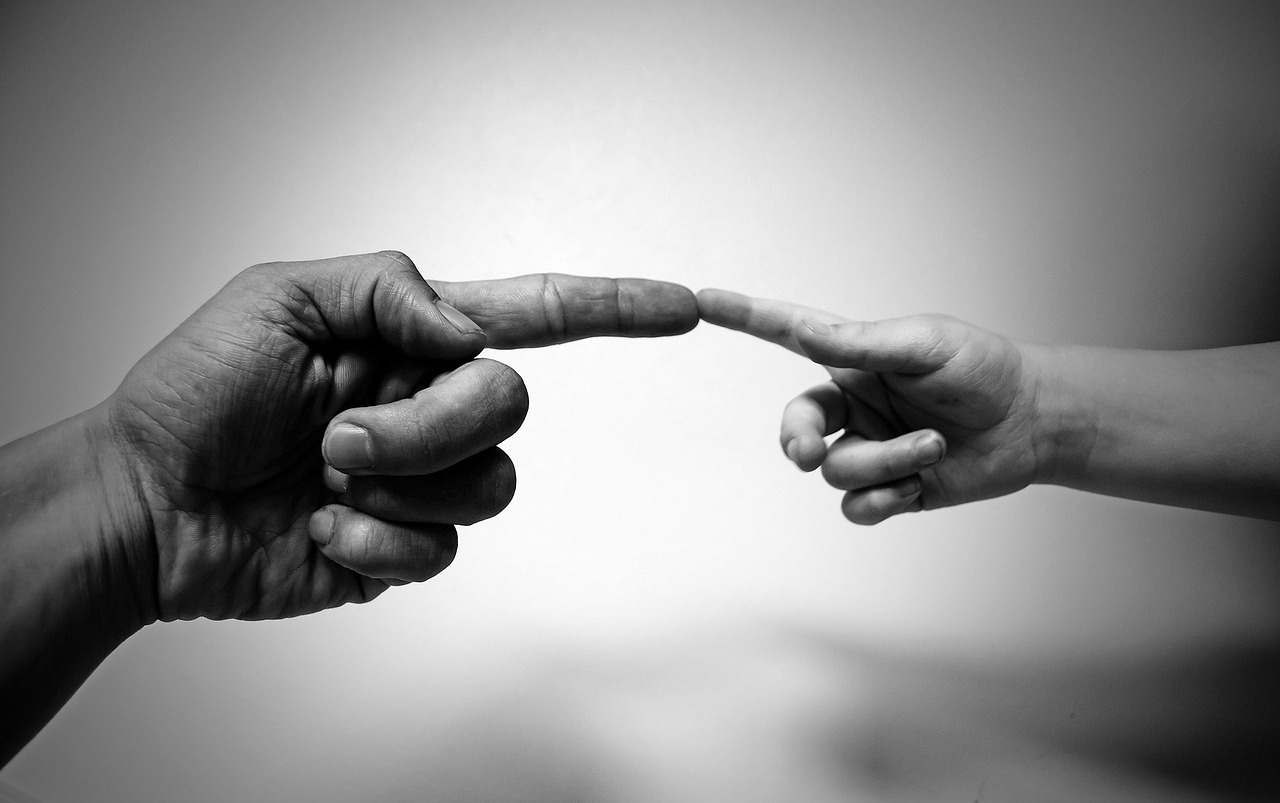
I would be lying if I said I was not somewhat inspired by the fact that it is Valentine’s day today. It’s a day that gets mixed responses from the Autistic community. Relationships are often a touchy subject for us. We live in a world that fights hard to keep us at the fringes. This, of course, led me to a talking point that has been considered time and again. Autistic people are not perpetual children. We do become Autistic adults, and we engage in adult relationships. You might think that this is all that needs to be said, but actually, there is a deeper conversation to be had about the infantilisation of our community and how this impacts our growing culture.
Wider society views us as “less than”. This is not a debatable point. It’s a fact. When you consider the history of autism and neurodiversity as a whole; we have been relegated to a lower rung of the social ladder than those who can successfully perform neurotypicality. We are treated as though we are child-like, and at times as though we aren’t even human. I have genuinely heard people say that having sex with an Autistic adult should be criminalised. It is assumed that we lack the capacity to make those sorts of choices for ourselves.
Let me pause their for a minute. Yes, it is true that there are Autistic people who lack the capacity to make decisions around romantic and sexual partners. There are Autistic people who are very vulnerable, whom predators wait to take advantage of. I do not want to take away from this. What I want to highlight is that Autistic people, in general, are more than capable of deciding they want to engage in an adult relationship or sex.
So now, we are left with this uncomfortable fact; we are seen as perpetual children. What purpose does it actually serve for those in power and privilege to allow the perpetuation of an idea that is so incredibly incorrect and harmful?
Autistic people are finding new ways to connect and organise. This has resulted in us having our own dialect, forms of socialisation, social rules, and collective hopes and dreams for the future. The growth of the online neurodiversity movement has empowered Autistic people beyond the point of activism. At this point, we are an emerging counter-culture. This is an important distinction to make.
By centring our existence as an identity and culture, we are disempowering medical and diagnostic models of neurodiversity. Normative systems have relied on the framing of autism as a condition of asociality and a lack of meaningful personhood. If we are emerging as a culture, clearly, we are more than a tick box exercise that can be used to fuel a captialist medical industrial complex. The claim that we lack sociality and personhood is fundamentally dismantled when we show the world that we are capable of not just building a culture but building one that diametrically opposes existing oppressive structures.
The quickest way to conquer your cognitive dissonance in this scenario is to assume we are incompetent. This incompetence comes on the form of infantilisation, which itself is rooted in childism and the assumption that all child-like people lack full personhood.
This is why, for the sake of our communities future, we need to crush infantilisation. We need to demonstrate not just our personhood but the reality of Autistic adulthood. We need to build the taboo nature of adult pursuits into our culture. This has been all-the-more important to me in my work with Autistic drug users. So many times have I seen Autistic people denied support because “Autistic people don’t use drugs”. Infantilisation is more insidious than invalidation of out culture, it is life-threatening.
If we want to move into a future where being Autistic can be more than an identity in a hidden counter-culture, we need to start by disproving the idea that we lack competence. We need to take a stand and demonstrate that we will not tolerate being treated as children.

One response to “The infantilisation of Autistic people and the future of our blossoming culture”
[…] post The infantilisation of Autistic people and the future of our blossoming culture appeared first on Emergent […]